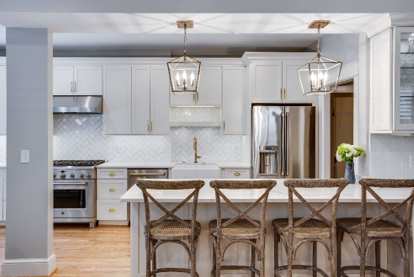
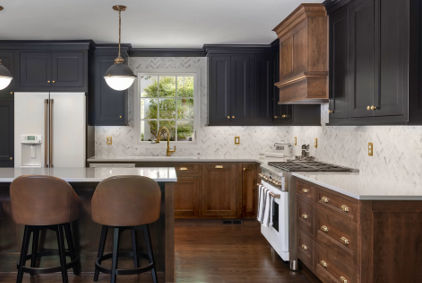
How the Bath+Kitchen team transformed Susan’s 1909 kitchen with contemporary design and functionality, construction work included
Big Changes & Small Details – Bath Plus Kitchen – Bath+Kitchen
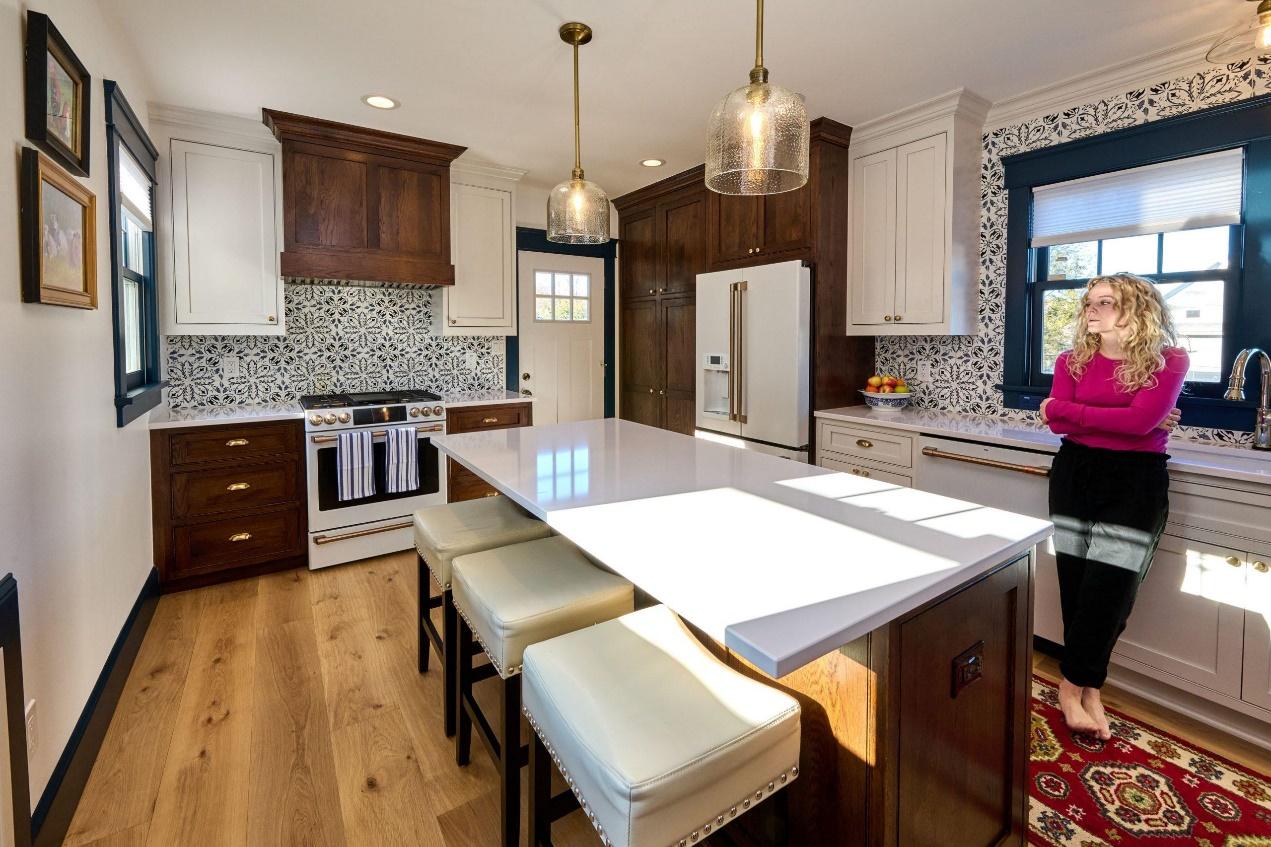
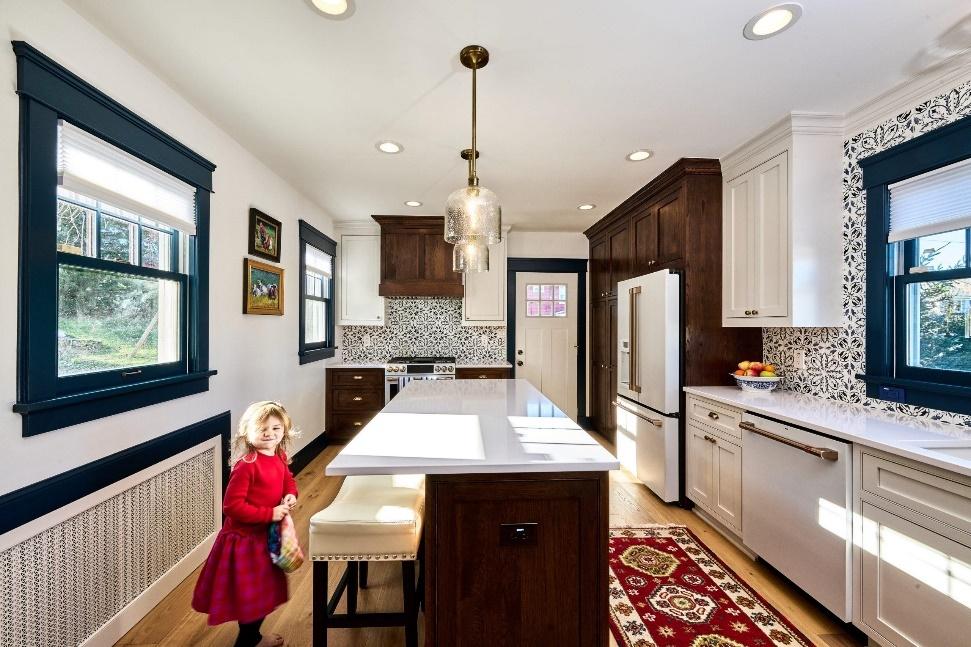
Marissa Shipe, Designer at Bath+Kitchen, pictured in Susan’s new kitchen
Marissa’s expertise lies in material selection and color coordination.
This design and remodel project was completed in 2021 for her mother, Susan.
This project was a special one for our core team, Eric and Marissa Shipe. We designed and remodeled this 1909 kitchen for Marissa’s mother, Susan, in New York. Not only was it a chance for us to create a beautiful space for someone close to us, but it was a wonderful way to mark a pivotal moment for Susan—when she responded well to treatment for cancer.
It was further away from our usual service areas, but our personal relationship with Susan made it comfortable for our team to stay at the house during the construction phase. This phase was extensive, and included replacing all the plumbing, supply lines, and drains for the entire house.
Project scope and design challenges
This was a major design and remodel of a 1909 kitchen, where B+K did everything except the countertops.
The design took about two months and several dozen revisions, mostly to do with color choices. There were also certain design trade-offs to be made, such as forgoing a large cooking range for a smaller one to accommodate a second oven and tall cabinetry. This kind of back-and-forth helps our clients identify exactly what they want, and what they’ll be happy with for years to come.
There were a few things that added complexity to the design process:
The new layout, which was going to be an open kitchen with a long and narrow layout; it can be challenging to work with such a space
We had decided to remove a non-load bearing wall to expand the kitchen and change the layout, which required us to consider many factors
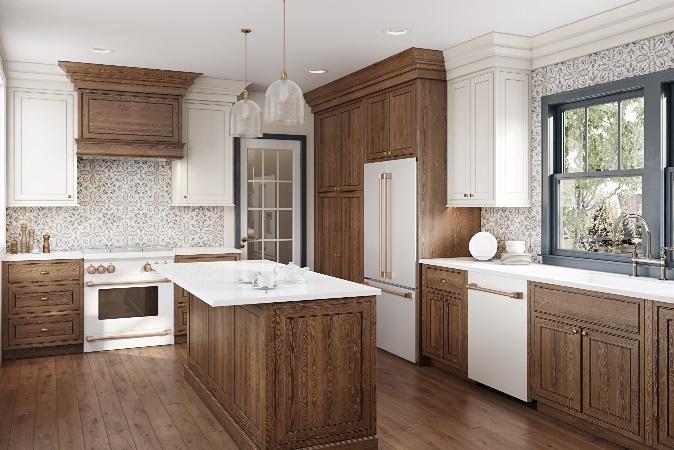
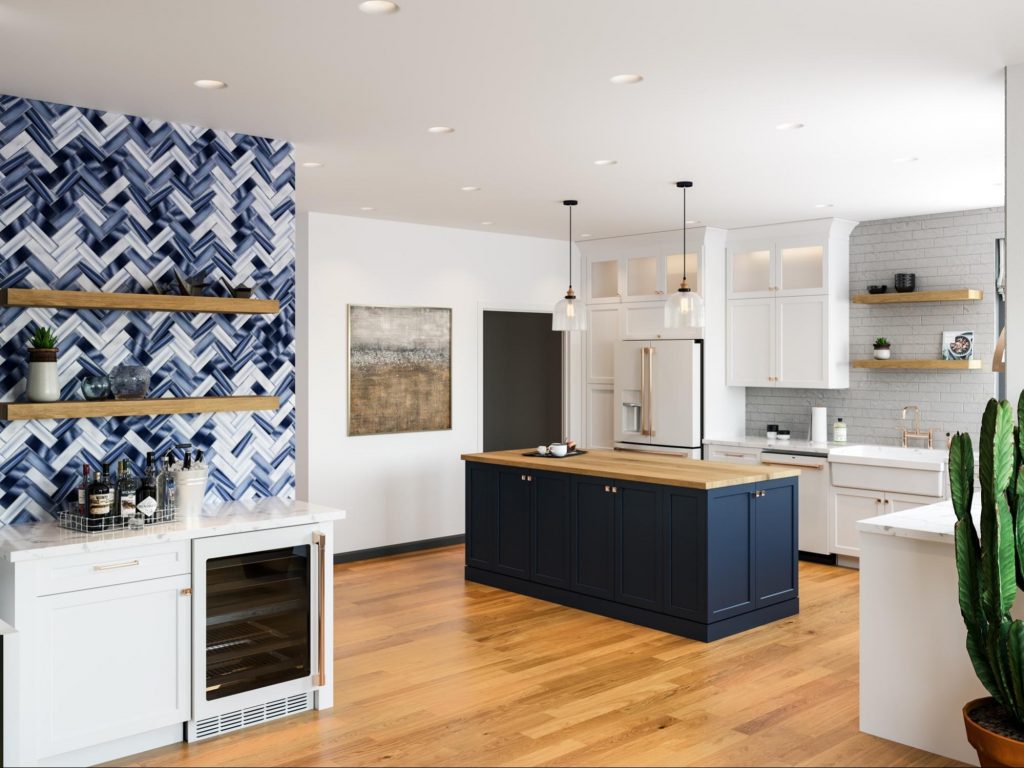
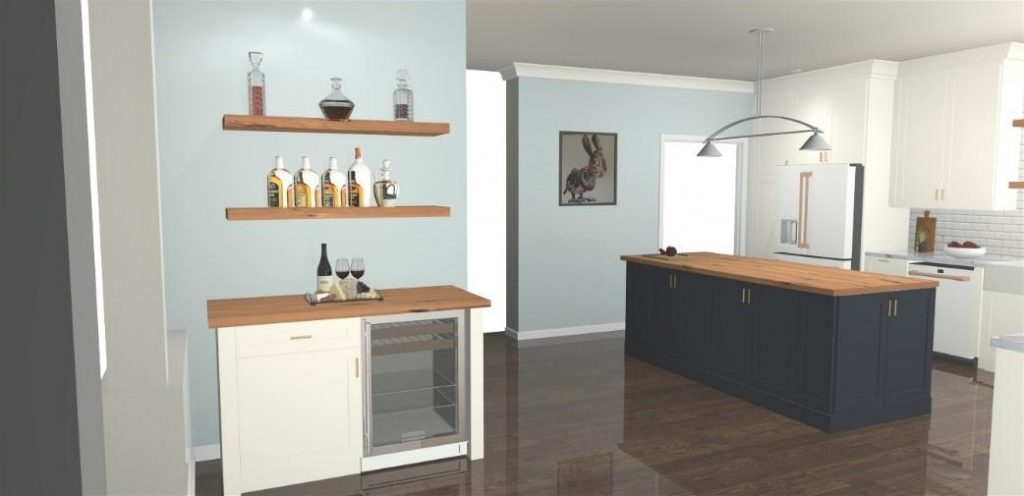
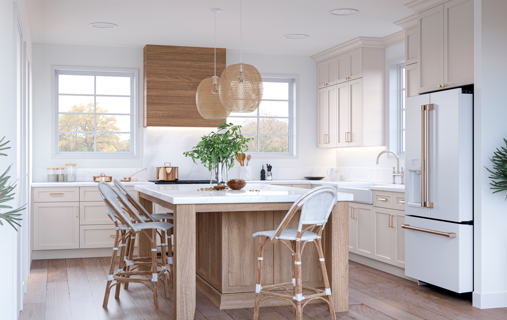
Tip: Any time there’s major construction involved, it’s important to be extra diligent about the design, to ensure all aspects of it work together seamlessly. That’s why we use high-quality photorealistic renderings, like the one shown below (R), to get a clear picture of how everything will come together.
Design changes for a new look with excellent functionality
As with all our projects, we poured a lot of thought into every single detail. Here’s an overview of some of the big ones, and a look at how they turned out in the finished kitchen:
1. Cabinetry
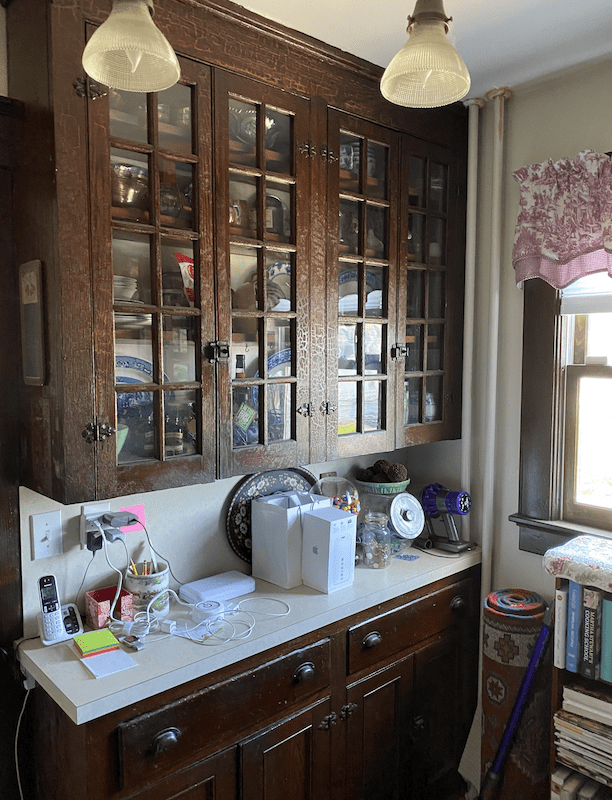
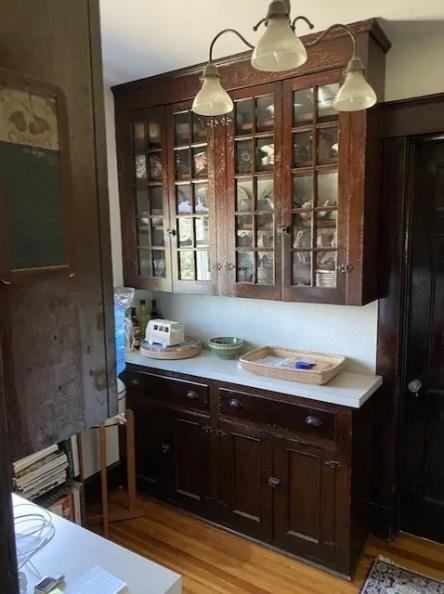
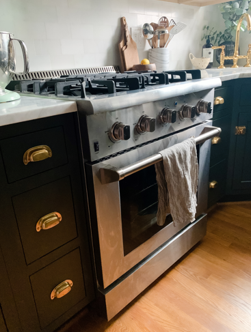
Susan’s kitchen had beautiful vintage cabinetry, but the drawers were difficult to use. It was missing the kind of smooth functionality and effortless experience you get with newer cabinetry. That’s one of our top priorities—we work with top-rated cabinetry manufacturers to ensure quality and ease of use for our clients. Here, we chose soft-closing doors and drawers for a smooth experience.
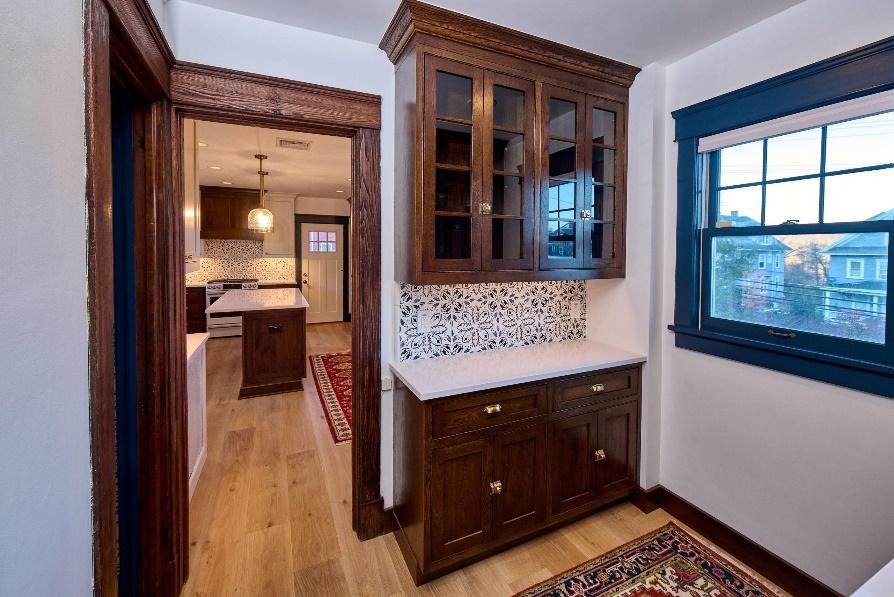
Cabinetry: Old vintage cabinets (L), new custom beaded-inset cabinetry (R)
There was some back and forth on which cabinets to do painted and which ones to do stained, so we looked at a number of renderings before we settled on the final design.
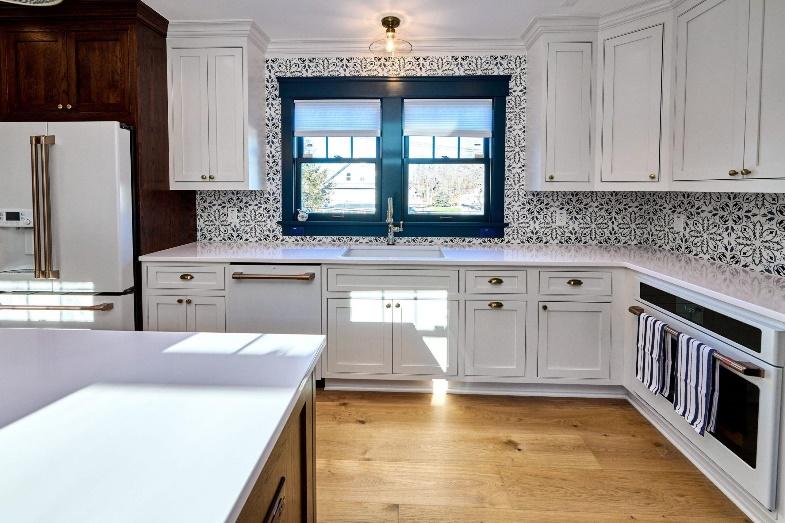
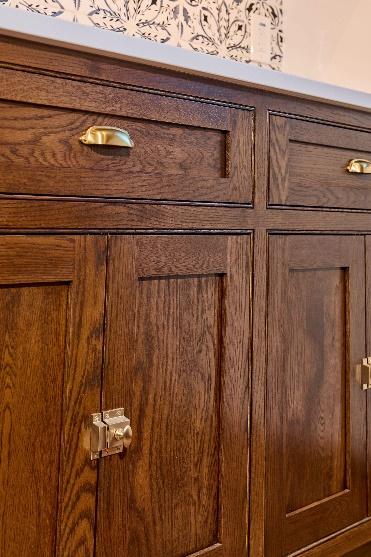
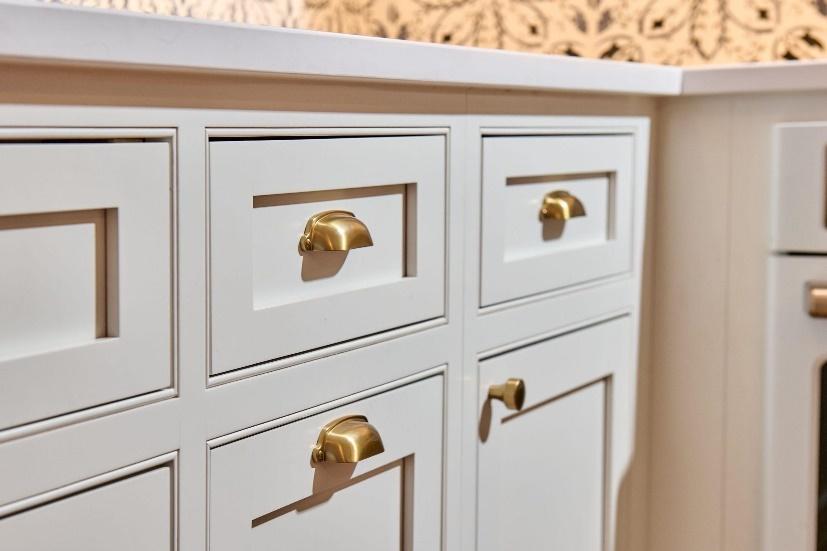
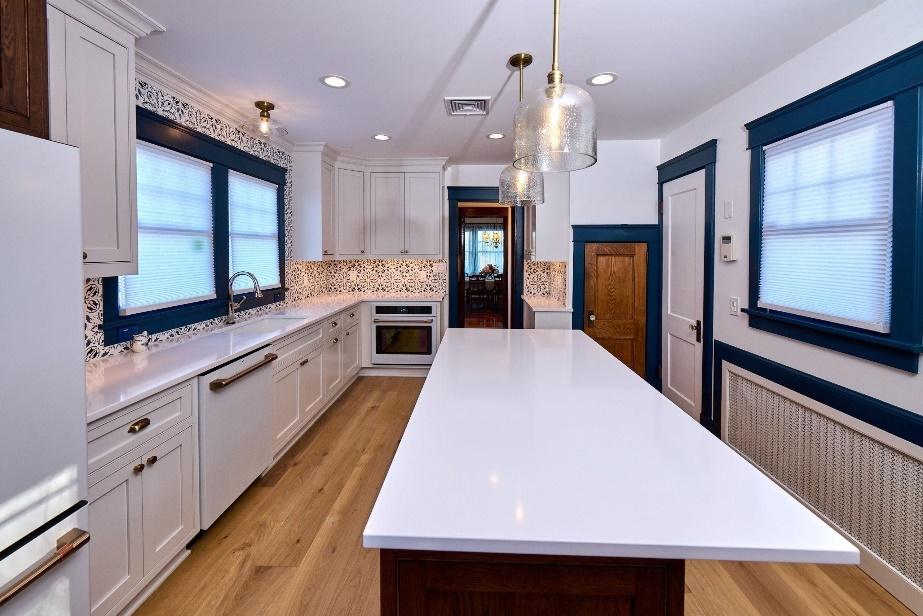
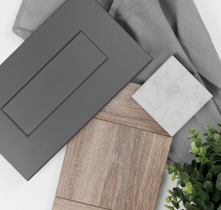
The final choice was custom beaded-inset cabinetry from Adelphi Cabinets. The door style is Legacy. The painted finish is Snowcap (R), and white oak is Acorn (L). As we’re sure you can tell just by looking, the great thing about inset cabinetry is it’s all built as one seamless cabinet.
New cabinetry by Adelphi Cabinets: The painted finish is Snowcap (R), and white oak is Acorn (L)
2. Backsplash
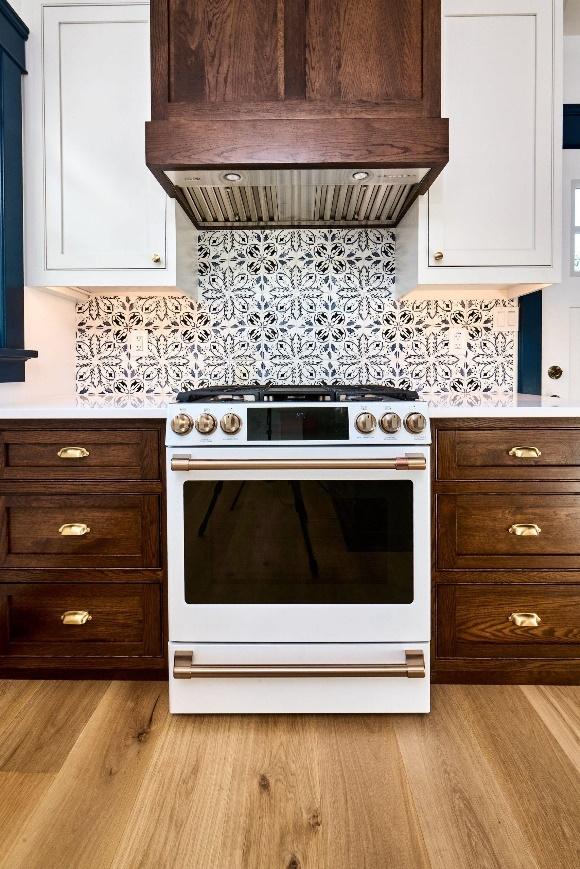
The backsplash tiles are hand-painted. It took 16 weeks to get them made, and our client agrees they are worth it! But what makes them unique also creates irregularities that need to be worked with carefully during installation. Still, we’re always happy to go the extra mile to create something customized and special for our clients!
Backsplash with hand-painted tiles below a gorgeous, paneled hood
3. Windows
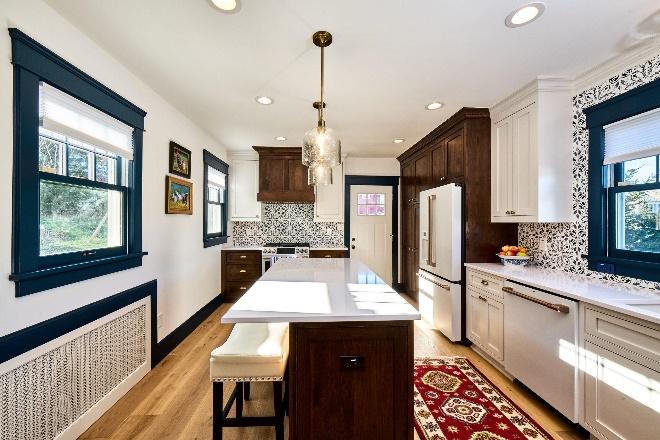
Marissa had a great idea for the base molding and window trims—she opted to do them in blue. We love how this deep, rich color adds contrast and frames the windows beautifully. We also maintained some of the original trim.
We also put outlets in the window trim, which is an area-specific requirement that needs to be met for a remodel to pass the inspection. This is one reason why working with a trusted remodel company is important: you need to be able to trust that they’re committed to getting everything up to code so you don’t run into issues down the road.
4. Lights
We put in a light above the sink, pendant lights, and recessed lights. Having the lighting on a dimmer switch makes for a customizable experience.
Recessed and pendant lights create task, ambient, and decorative lighting
5. Smart tech
Eric recommends: A touchless faucet with an indicator light that tells you what temperature the water is. He uses one in his own kitchen as well.
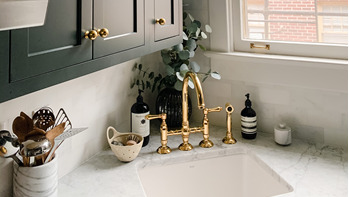
For Susan, we put in a touchless faucet by Brizo, where the indicator light turns red when the water is hot, and blue when it’s cold—excellent functionality!
6. Style
With decorative paneling and retaining some of the original window trim, we were able to preserve the charm of Susan’s more traditional kitchen, while giving it a fresh new look and feel.
Susan’s vintage cabinetry (L); New cabinetry with traditional charm and modern functionality.
Getting to the finish line
After a two-month design process, we were ready to start construction in the summer of 2020. Sadly, just as we were finishing the design, Susan was diagnosed with stage 4 lung cancer. She was treated at the Memorial Sloan Kettering Cancer Center.
Susan has responded very well to treatment. Because of that, she wanted to proceed with the remodel in the fall of 2021.
Marissa handled all selections for the project. In addition, to support Sloan, where her mother was treated, Marissa joined Fred’s Team and ran the NYC marathon to raise money. She raised $16,495, surpassing her goal of $3,500.
B+K’s Marissa Shipe, Susan’s daughter, at the NYC marathon to raise funds for the Memorial Sloan Kettering Cancer Center
Construction challenges & delays
There were two factors that made this remodel challenging:
a) The age of the house
This project had several construction-related change orders due to the age of the home.
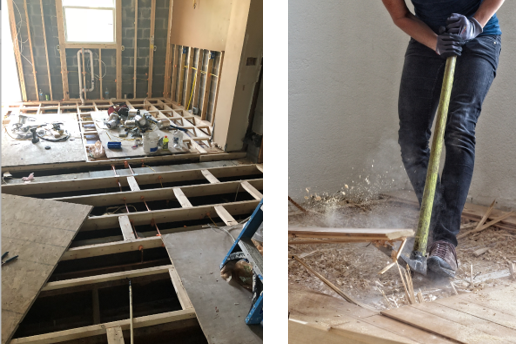
Conditions were impossible to know without doing the demolition first. When a project involves demolition, there are usually a few challenges and surprises along the way. These can extend timelines by as much as 3x or 4x.
To keep delays to a minimum and prepare clients as well as possible, we are careful to note and communicate any additional steps that have to be taken to ensure the job is done right.
In Susan’s house, one of the biggest challenges was leveling the walls, floor, and ceiling, to help the remodel progress smoothly. These surfaces can be out of plumb, i.e., not level, in many older homes.
At B+K, we don’t believe in skipping steps, because we know any shortcuts will cost you in the long run. So, we leveled the walls for Susan’s new cabinetry to sit right and added floor joints to get the floor to the same level. We also completed vital steps such as sistering and framing to strengthen joists and prevent sagging, which we always recommend.
Tip: Ask your contractor about sistering, and if you need your floors, walls, or ceilings leveled. Many low-ball remodel estimates don’t factor in the costs of these steps; if you skip them, you may not get good, lasting results.
b) COVID-related delays
Remodeling now could be a great idea, especially if you or your family work or study from home. Many of us have been exploring ways to make our homes more comfortable in the past two years.
However, remodeling today also requires patience due to current labor and material shortages. While remodeling Susan’s kitchen, we faced COVID-related delays on flooring and cabinetry. In these situations, we keep the process moving smoothly by getting and offering clarity on any supply chain issues that come up.
Typically, until all materials reach the house, we’re in constant communication to firm up lead times and know as soon as possible if there are going to be delays, so we can modify our plans and keep our clients in the loop. Accounting for production issues, we like to put in our orders asap to avoid delays—we’d rather get everything onsite or in our warehouse at the earliest, than have our clients experience delays.
At B+K, our goal is to elevate your kitchen by enhancing its most beautiful features, while creating a fresh new look and flawless feel. With us, you get the best design recommendations, a smooth experience, and a beautiful, high-quality finish every time.
But we don’t just go by proven expertise and the latest designs—to us, your goals and visions matter most. Through in-depth surveys and guidance, we help you zero in on what you really want, to create a space you and your family will love for years.
If you’d like us to design your kitchen or bathroom, explore our design packages, which are available for purchase. We are able to ship cabinets nationwide and work with you virtually if you are outside of the DC Metro area.
In recent years, fusion kitchens have gained popularity among homeowners and interior designers alike. These innovative kitchen designs artfully blend traditional and modern elements, creating a unique and personalized space that is both stylish and functional. This article will explore the key components of fusion kitchens, offering tips and inspiration to help you create the perfect blend of old and new in your home.
II. Benefits of Fusion Kitchens
Fusion kitchens bring together the best of both design worlds by combining classic, timeless elements with contemporary, cutting-edge features. This balanced approach results in a visually appealing space that offers enhanced functionality, catering to the needs of modern families while retaining a sense of warmth and charm. Furthermore, fusion kitchens possess a timeless appeal that can increase the value of your home, making them an excellent investment for the future.
III. Traditional Design Elements to Incorporate
To create a successful fusion kitchen, start by incorporating traditional design elements that evoke a sense of history and comfort. These may include:
Classic materials: Incorporate natural materials like wood, brick, and stone in your countertops, cabinetry, or as accent pieces to add warmth and texture to the space.
Time-honored fixtures and hardware: Choose antique or vintage-inspired fixtures, such as brass or bronze faucets and cabinet handles, to lend a touch of classic elegance to your kitchen.
Vintage-inspired appliances and furniture: Select retro-style appliances and furniture pieces, like a farmhouse sink or a wooden dining table, to anchor your fusion kitchen with timeless charm.
Once you’ve established a foundation of traditional elements, introduce modern design features to create a fresh, contemporary vibe. Consider the following:
Sleek lines and minimalist aesthetics: Opt for streamlined cabinetry and furniture with clean lines, smooth surfaces, and minimal ornamentation to evoke a sense of modern simplicity.
Contemporary materials: Use glass, stainless steel, and concrete to create a sleek, industrial feel that contrasts with the traditional materials in your kitchen.
High-tech appliances and smart home integration: Equip your kitchen with the latest appliances and integrate smart home technology to improve functionality and convenience.
V. Tips for Achieving a Balanced Fusion Kitchen
To create a harmonious fusion kitchen, consider these tips:
Find the right mix of old and new: Strike a balance between traditional and modern elements to ensure that neither style overwhelms the other. This may require some trial and error, but the result will be a beautifully cohesive space.
Focus on complementary colors and textures: Choose a color palette that blends well with both traditional and contemporary elements, and mix textures to create visual interest and depth.
Use lighting to create a harmonious atmosphere: Incorporate various lighting sources, such as pendant lights, under-cabinet lighting, and recessed lighting, to highlight the unique features of your fusion kitchen and create a warm, inviting ambiance.
VI. Inspiring Fusion Kitchen Design Ideas
To spark your creativity, explore these fusion kitchen design ideas:
Farmhouse-modern: Combine rustic, farmhouse elements like a reclaimed wood island with sleek, stainless steel appliances and minimalist cabinetry.
Industrial-traditional: Pair exposed brick walls and vintage lighting with modern, streamlined cabinetry and concrete countertops.
Eclectic fusion: Mix and match various design styles, such as mid-century modern seating with classic subway tile backsplash, to create a truly unique and personalized fusion kitchen.
VII. Conclusion
Fusion kitchen design offers a creative and personal approach to creating your dream kitchen, allowing you to blend your favorite design elements from various styles. By incorporating traditional and modern features, you can achieve a unique, visually appealing space that is.
Arlington homeowners, it’s time to embrace home cooking and ditch the takeout! By revamping your kitchen, you’ll not only add value to your Arlington, VA home but also enjoy numerous benefits such as customized ingredients, bonding with loved ones, learning new cooking techniques, reducing food waste, and saving money. Image source: Unsplash.com – Jason Briscoe
Embark on a culinary journey by addressing these common kitchen quandaries in your Arlington, VA home:
Transform your Arlington kitchen into a culinary oasis by maximizing space and functionality. Consider adding a kitchen island, fold-down countertop, window seat with storage, rolling cart, or wall-mounted table for increased storage and work area.
Cramped Quarters:
Transform your Arlington kitchen into a culinary oasis by maximizing space and functionality. Consider adding a kitchen island, fold-down countertop, window seat with storage, rolling cart, or wall-mounted table for increased storage and work area.
Stumbling Through Your Workspace:
Revitalize your kitchen’s flow by focusing on the “golden triangle” of stove, refrigerator, and sink. Rearrange cooking gear for maximum efficiency, reconfigure cabinets and countertops, and improve traffic flow. For a tailor-made solution, consider consulting a local Arlington kitchen designer or contractor.
Dim and Dreary:
Brighten your Arlington kitchen with proper lighting. Install under-cabinet lighting, upgrade fixtures, paint walls and cabinets in lighter shades, and add mirrors or reflective surfaces. Clean your windows and add task lighting for a well-lit workspace.
Ventilation Woes:
Combat mold, mildew, and lingering odors by improving your kitchen’s ventilation. Install a range hood, vented exhaust fan, window, or skylight, and upgrade windows and doors for energy efficiency.
Cleanup Conundrums:
Make cleaning a breeze with backsplashes, a pantry, easy-to-clean flooring, and low-maintenance countertops. Add a dishwasher and optimize ventilation for a sparkling kitchen.
Outdated Gadgets:
Upgrade your Arlington culinary arsenal with modern appliances that make cooking faster, more efficient, and enjoyable. Begin with small, impactful appliances, prioritize upgrades, choose energy-efficient options, and plan for maintenance.
By incorporating these creative solutions, your Arlington, VA kitchen will transform into a hub of culinary inspiration. You’ll not only enjoy a more functional space but also save money, reduce waste, and create a welcoming environment for family and friends. Say goodbye to takeout and hello to your inner chef, Arlington homeowners!
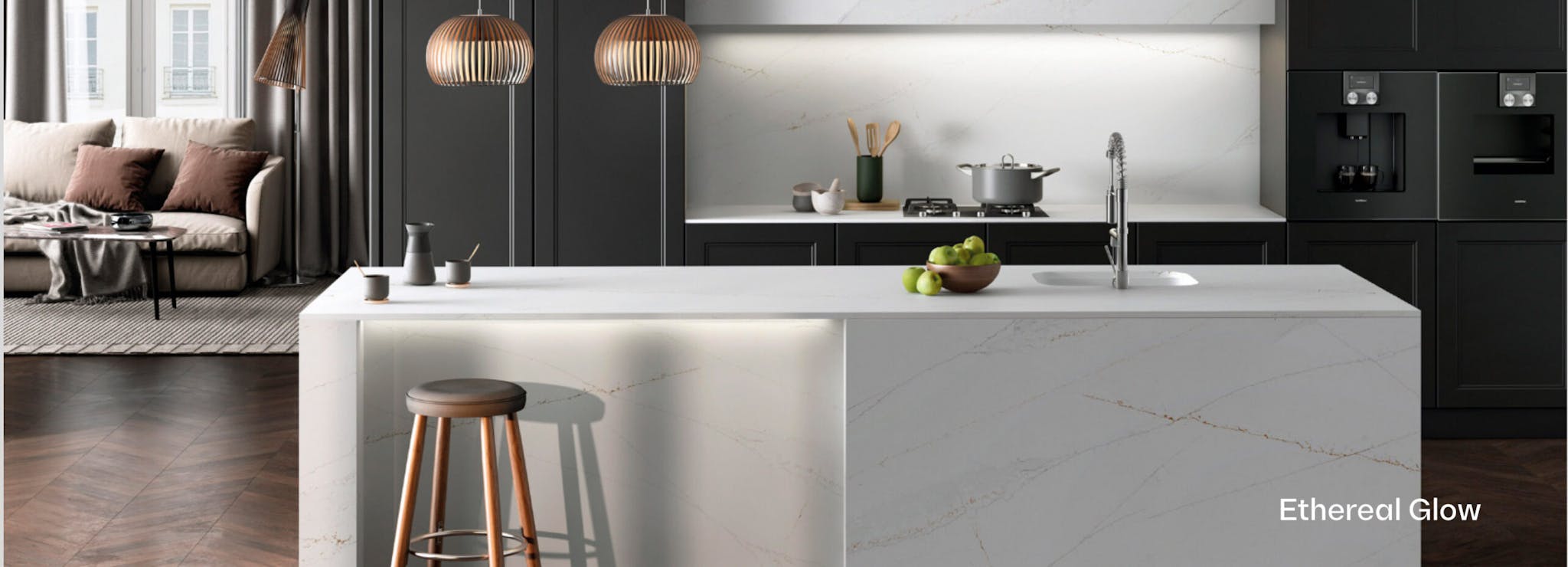
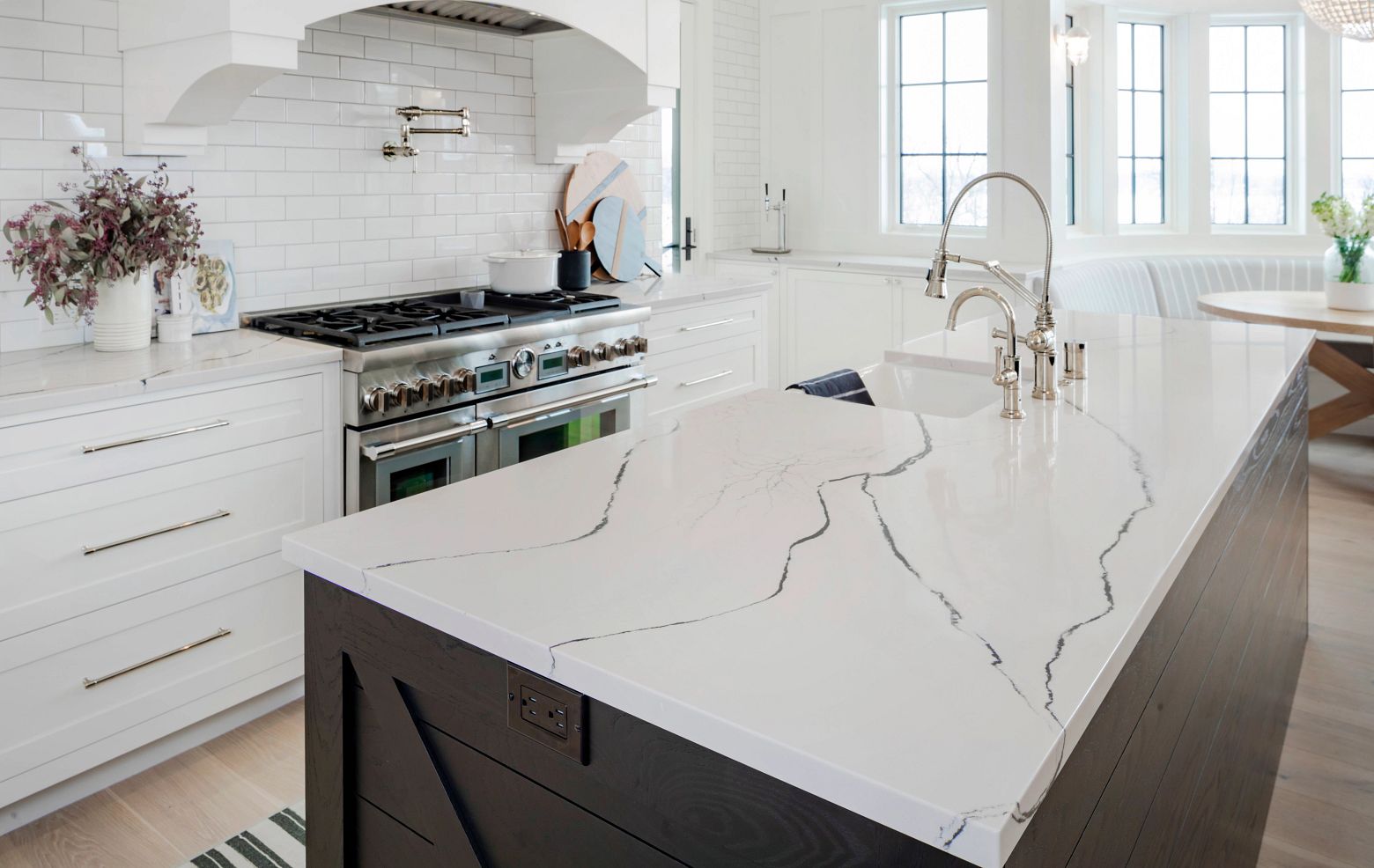
Silestone quartz countertops are gaining popularity due to their remarkable durability, superior stain and scratch resistance, and low-maintenance properties. These countertops are known for their sleek and elegant designs, and they are available in a variety of finishes, patterns, and colors. In this blog, we will explore the advantages of Silestone quartz countertops.
1. Durability: Silestone quartz countertops are engineered to withstand heavy wear and tear over the years. Made from natural quartz, they are harder and sturdier than most other countertop surfaces, making it virtually impossible to scratch or chip them. Moreover, they have zero porosity which makes them resistant to stains, and they are also resistant to heat, so you don’t have to worry about placing hot pots and pans on your countertop.
2. Low-maintenance: One of the best advantages of Silestone quartz countertops is that they are entirely easy to maintain. Unlike natural stone and wood, you don’t have to pour oil or sealant on them to prevent them from getting damaged. Silestone quartz countertops merely need to be wiped with a damp cloth to keep them looking as good as new.
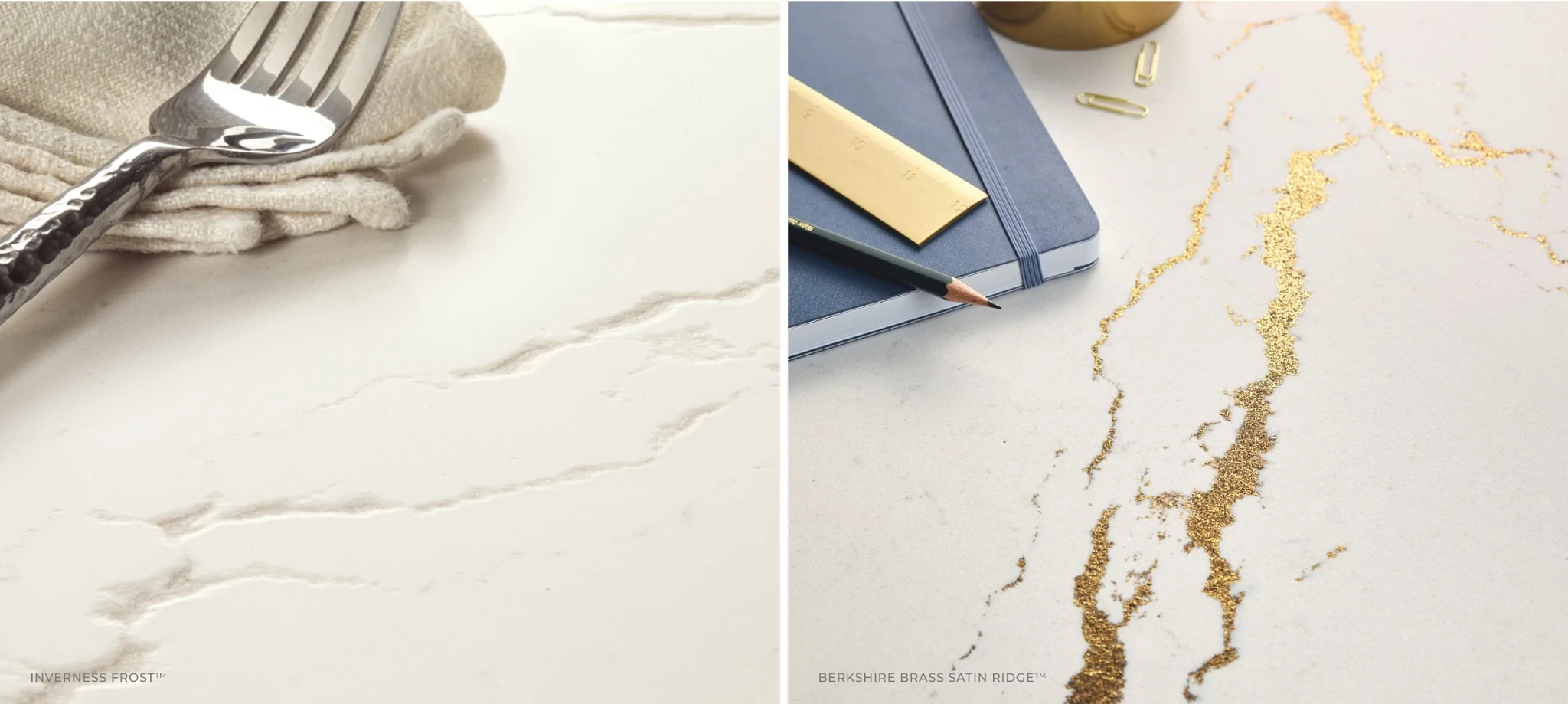
3. Variety: Another benefit is the broad range of finishes, colors, and patterns that are available in Silestone quartz countertops. You can choose between a sleek, polished finish or a more natural matte finish that mimics the appearance of marble or granite. Furthermore, Silestone comes in a variety of vibrant colors and patterns that can make a bold statement or provide a subtle look, depending on your preference.
4. Eco-friendly: Another benefit of Silestone quartz countertops is that it is made from sustainably sourced materials that are safe for the environment. The material used in manufacturing the countertops does not emit volatile organic compounds (VOCs) that can cause pollution or harmful health effects.
To round up, Silestone quartz countertops are an excellent choice for anyone looking for a low-maintenance, durable, and stunning countertop surface that adds value to their home. With a variety of colors, patterns, and finishes to choose from, homeowners can customize their countertops to match their creative vision and style. With Silestone quartz countertops, you get a durable, low-maintenance, and eco-friendly product that will transform your kitchen or bathroom.
Cambria quartz countertops are quickly becoming one of the most popular choices for homeowners when it comes to kitchen and bathroom renovations. This is due to the numerous advantages they offer over other countertop materials such as granite and marble. In this blog post, we will explore the advantages of Cambria quartz countertops in detail.
1. Durability: Cambria quartz countertops are extremely durable and can withstand heavy use and abuse without showing any signs of wear and tear. This is because they are made of 93% natural quartz, which is one of the hardest materials on earth, and 7% resin binder. This combination makes Cambria quartz countertops highly resistant to scratches, stains, and chip
2. Low Maintenance: Cambria quartz countertops are very easy to maintain. They do not require any sealing, polishing or reconditioning, unlike natural stone countertops. All you need to do is clean them regularly with a mild soap and water solution to keep them looking like new.
3. Variety of Colors and Patterns: Cambria quartz countertops are available in a wide variety of colors and patterns, making it easy to find the perfect match for your home’s decor. They can mimic the look of natural stone or come in unique and vibrant colors that can give your kitchen or bathroom a modern and sleek look.
4. Safe for Food Preparation: Cambria quartz countertops are non-porous, which means that they do not harbor bacteria, making them safe for food preparation. They are also NSF certified, which is a standard of safety and quality recognized by the National Sanitation Foundation.
5. Environmentally Friendly: Cambria quartz countertops are an environmentally friendly choice as they are made using sustainable manufacturing processes and contain recycled materials. They are also Greenguard Gold certified, meaning they emit low levels of volatile organic compounds (VOCs) which can be harmful to indoor air quality.
6. Longevity: Cambria quartz countertops come with a lifetime warranty, which is a testament to their durability and longevity. This means that you can be assured that your investment will last for many years to come, making it a great long-term investment.
In conclusion, Cambria quartz countertops are an excellent choice for homeowners who want a durable, low-maintenance, and stylish countertop option. With their wide variety of colors and patterns, they can fit into any home decor and provide a safe and sanitary surface for food preparation. Additionally, their environmental friendliness and long warranty make them an excellent long-term investment.
Red kitchens are dramatic and daring. But they’re also beautiful and elegant. Red has the power to add excitement to any space. While most homeowners typically play it safe with neutrals, a red kitchen could be the right choice for you.
This color is challenging to work with, because any mistakes or poor design choices will be hard to miss. Without proper planning and thought, the color can be overwhelming.
But when done right, with the right shade, finish, and design choices, it can enrich and elevate your kitchen.
Red lends itself beautifully to different kitchen styles—traditional, modern, contemporary, or transitional—as you’ll see below.
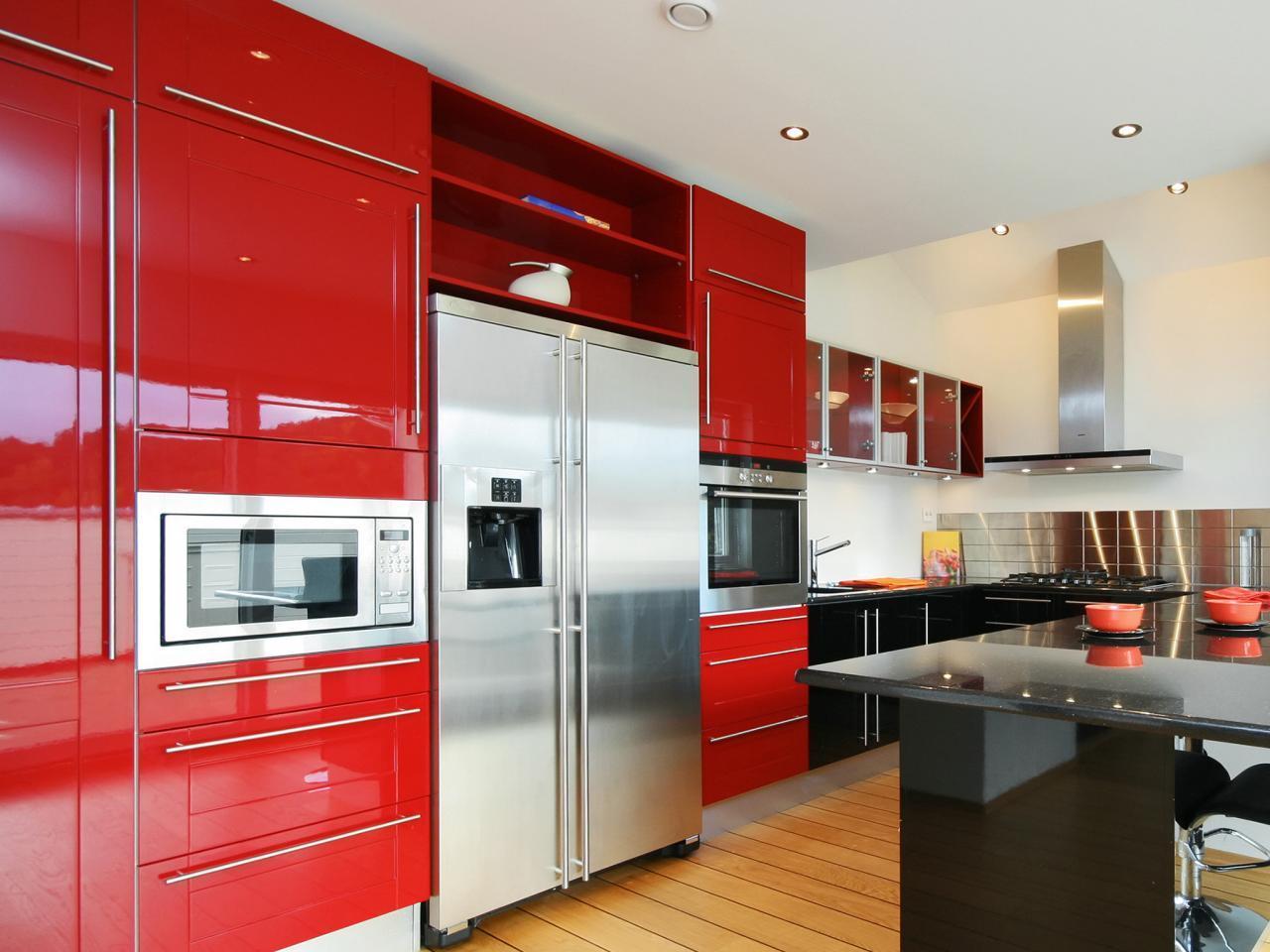
Bold cabinetry is one of our ‘Kitchen Design Trends to Look For in 2023’, and red certainly fits the bill! In a modern kitchen, red cabinetry is a great way to bring in some color and personality. Red cabinets are usually used in kitchens with lighter colored walls, floors, and countertops.
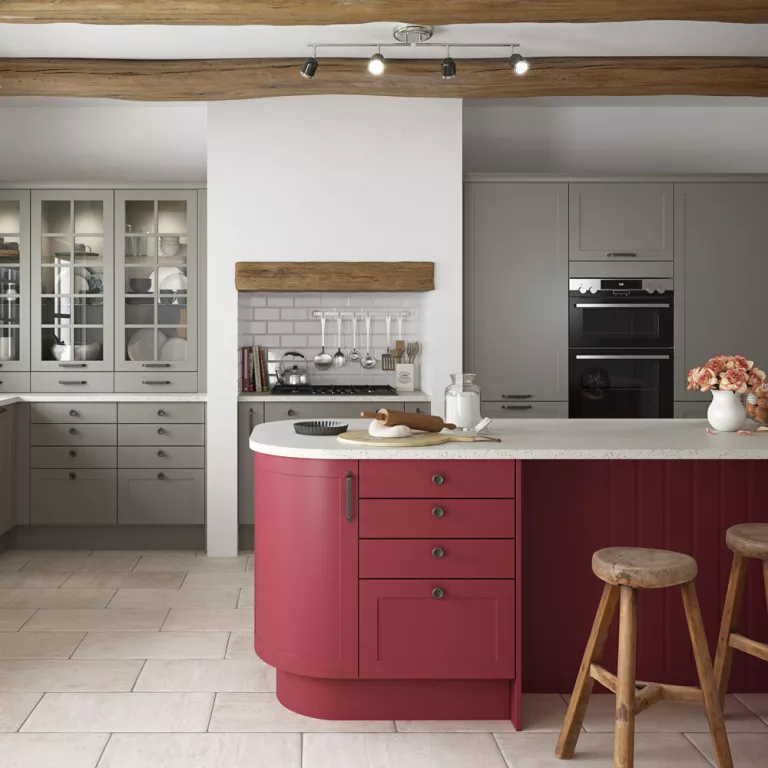
A red kitchen island can liven up a neutral kitchen and make a statement. If you have an open kitchen and living space, and often invite friends and family to eat at the kitchen island, red can make the island and the entire space more welcoming.
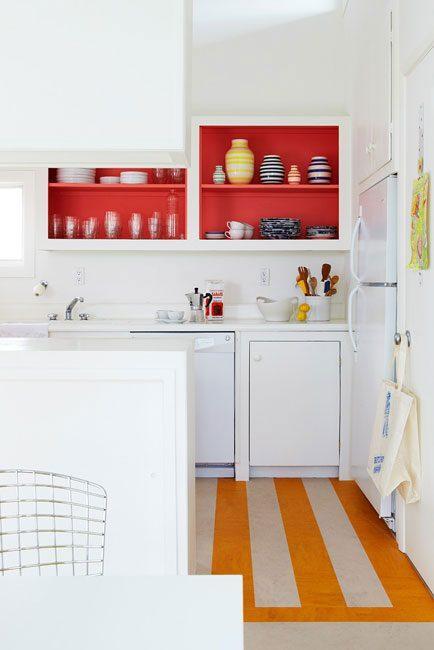
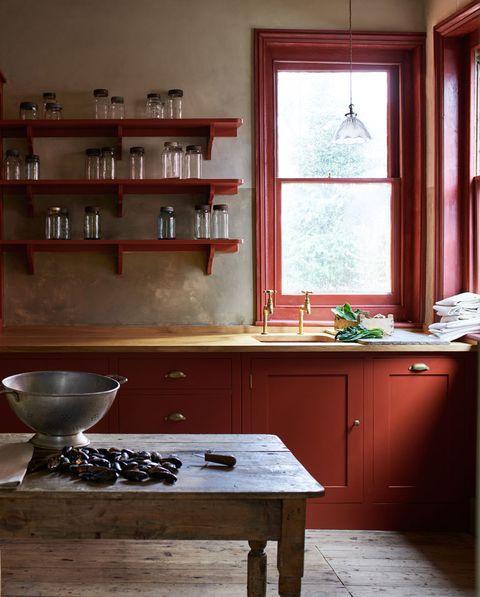
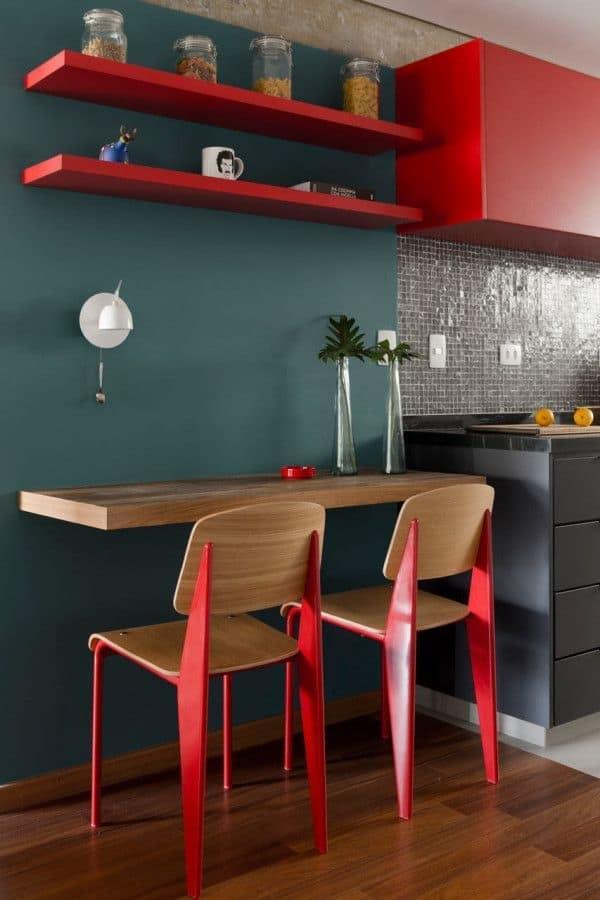
Red wall cabinetry can deliver a solid “wow” factor, but if that feels too bold, you can try red base cabinetry. It’s more subtle, but will still add depth and richness to your kitchen cabinetry. To create balance, pair it with wall cabinetry in a neutral shade or with open shelving as pictured above.
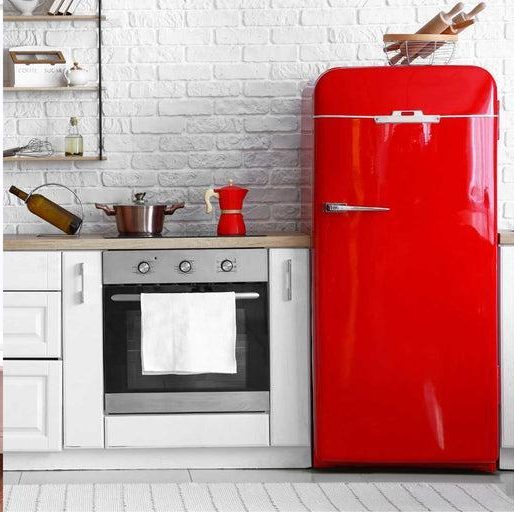
A retro red refrigerator can be a fun addition to your kitchen. It makes for an interesting feature, especially in a white or neutral kitchen. If you decide to go with this option, consider matching smaller kitchen appliances to it as well.
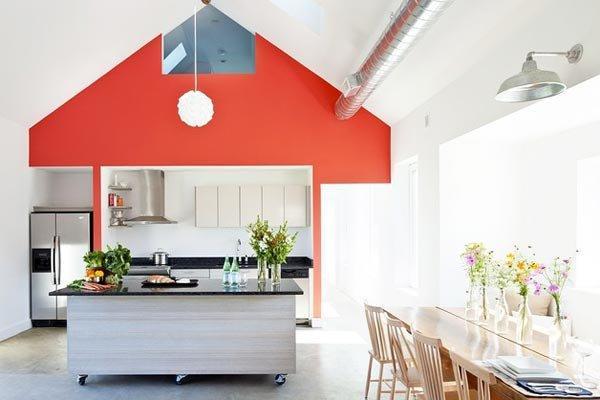
Use a red accent wall to break up any monotony in the room and create an interesting focal point. It will allow you to maintain a clean, neutral aesthetic but still enjoy the vibrancy of this energizing color. You can choose one wall, or even just part of one.
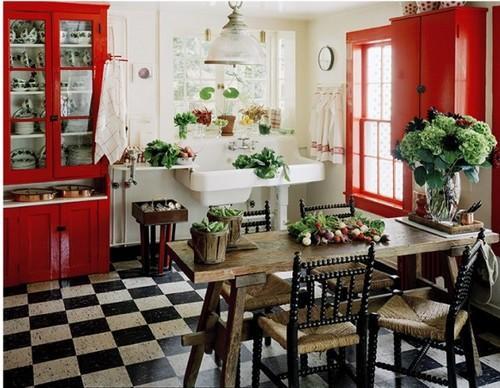
Black and white kitchens are beautiful as is, but a little red can add interest to this color scheme. Red can draw attention to and highlight beautiful pieces of furniture, windows, and other design features. In a black and white kitchen, this color is particularly striking and impactful.
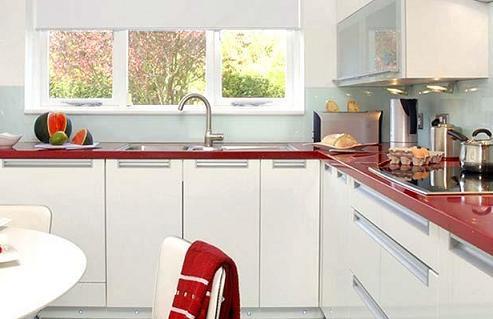
Countertops with a marble or wood aesthetic are very popular, but if you want something different, consider a bold color like red. This would work well in a contemporary kitchen, such as an all-white or dark kitchen.
Tip: If you love a natural wood aesthetic, redwood or stained wood countertops can also create contrast while adding richness and depth to a neutral kitchen.
A red backsplash in a neutral kitchen is eye-catching. It can add a little warmth and help create a welcoming environment for friends and family. When planning your backsplash, think about how bold shades of red would look against white cabinets and countertops or with contrasting black appliances. And you don’t have to stick to a single shade; you can mix a few with subtle variations or select several different shades for an eclectic look that expresses your personal style!
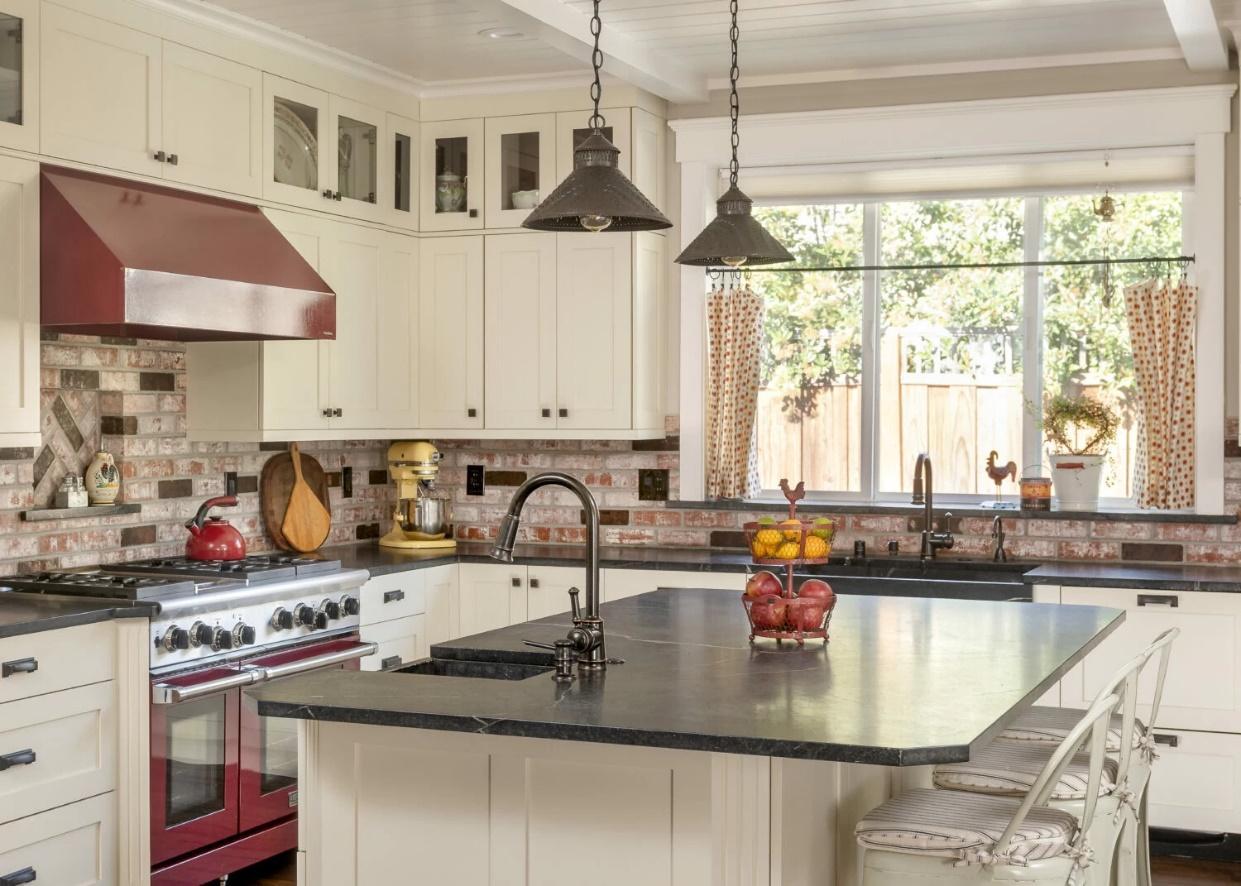
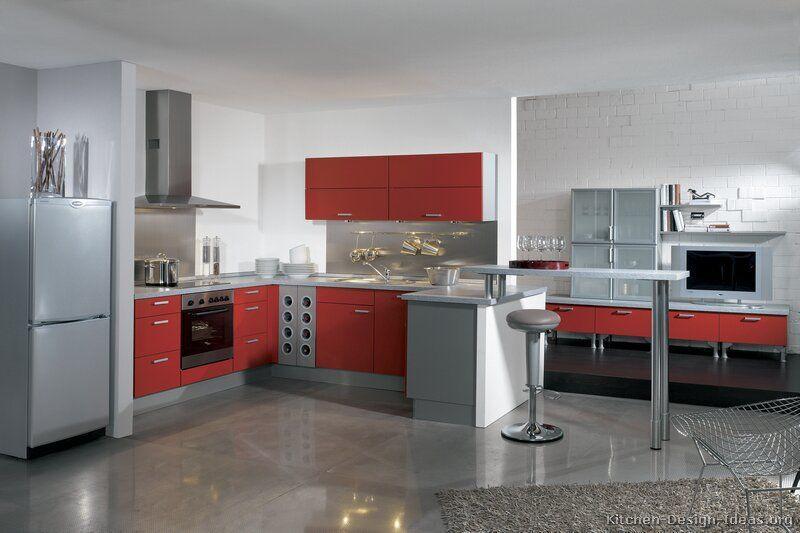
The first thing to consider when designing a kitchen is the color scheme. A neutral base like white or gray makes it easier for you to add color without having to worry about clashing. Once your color scheme is in place, feel free to get creative. You can do this with key appliances such as your hob and chimney, as pictured above.
Sleek red appliances—like this hob and chimney or the retro fridge we mentioned earlier—can add an elegant touch of red to your kitchen without being overwhelming. And the best part is, you can switch up the colors when you upgrade your appliances next and choose a different color if you want to move away from red. Aside from your hob and chimney, you could also consider a red dishwasher, microwave, and other small appliances; they look especially striking in a neutral kitchen.
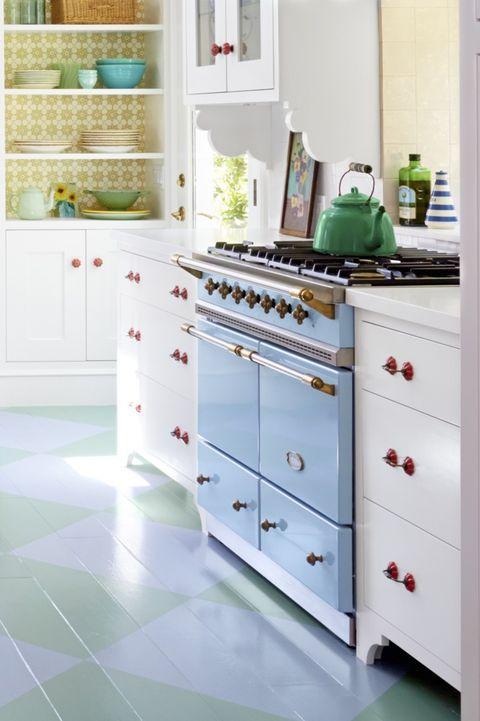
If you have white or light-colored cabinets, red hardware can draw attention to them and make them look even better than they already do. You can use red drawer pulls, knobs, and hardware to add small but noticeable pops of red that will brighten your kitchen in an understated way.
12. Two-toned cabinetry, with red as the accent color
When it comes to two-toned kitchens, choosing the right accent color is essential. It will determine how much contrast you create, i.e., you can choose two similar shades or create contrast with a dramatically different accent color.
While red can work as either the main color or the accent color, it is particularly powerful as an accent color.
Red also works with any kitchen style you like—such as traditional or contemporary, farmhouse chic or modern minimalist. So, for the best outcome, consider your kitchen style when you choose a shade and finish of red for your accent color.
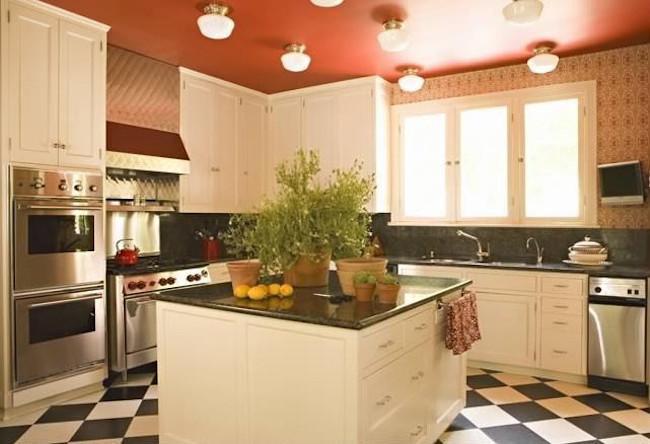
It’s unconventional, but that’s what makes it striking and memorable! Painting the ceiling a deep shade of red will make your space feel luxurious. It also creates the illusion that your ceiling is higher than it is, making your kitchen look larger than it is. Consider your ceiling color when you’re trying to make your kitchen look spacious and elegant.
14. Red open shelving to draw the eye upward, visually stretching the space
Just as red ceilings can make your space look larger, red open shelving draws the eye upward, visually stretching the space. This makes it perfect for small kitchens where every inch counts! If you want to showcase your favorite dishes and accessories, red open shelving is a great option.
Before you incorporate red into your kitchen… There are many ways to infuse red into your kitchen. When done tastefully, it can keep your kitchen design looking fresh for years.
a) The right shade for your chosen kitchen style: For a classic look, you could opt for deep red hues like burgundy or maroon. If you’re looking for something more modern, try a lighter shade like tomato red. For an eclectic space, consider an orange-red shade like burnt sienna or terracotta. A good designer will help you settle on the right shade for your kitchen, factoring in your desired style and aesthetic.
b) The right finish and materials for your chosen kitchen style: To select the finish and materials for your kitchen, including for the red accents and features, a good kitchen designer will consider the style you have chosen. The shade, finish, and materials you select for adding red to your kitchen must fit in with the overall style you choose. Here are some examples of distinguishing features that help define a style and impact design choices:
Traditional: Ornate details such as crown molding and decorative trim around doors and windows
Farmhouse: Rustic elements such as white cabinets and wood floors, with a warm feeling thanks to its use of natural materials such as wood and stone countertops
Industrial: Stainless steel appliances, concrete countertops, and other highly functional materials
Modern kitchens: Contemporary designs with sleek lines, typically with white or neutral-colored walls
Red is an exciting and vibrant color that can be a great choice for your kitchen if you want to add some excitement and drama to your space. It may not be the most practical color for every type of kitchen design, but it’s certainly worth exploring if you’re looking for something that will stand out amidst all the neutral-colored kitchens out there!
You can also use these tips to incorporate other bold, vibrant shades you love into your kitchen design, to create a space you and your loved ones will enjoy spending time in.
White cabinets are a classic option for kitchen design and are very popular. They not only increase the size of a small kitchen and brighten any room, but they can also give a larger kitchen a more unified appearance. White cabinetry adds a sophisticated dimension to your new or remodeled kitchen project. It is cheerful and upbeat. White in the kitchen is a favorite of creative designers because it gives small touches of creativity a chance to shine. The question is, how do you match them up with the rest of your kitchen? Here are a few simple tips.
Pros and Cons
White cabinets have the advantage of making even the smallest spaces feel larger and more open. Regardless of your preferred style or trend, let’s not forget the clean, classic look. When combined with the ideal countertop, backsplash, and flooring, white cabinets can serve as a unified, polished anchor in small to large kitchen spaces.
Of course, there are a few drawbacks to a kitchen that is predominantly white that should be taken into account. Working with a trained kitchen remodeling contractor in Austin, Dallas, or wherever you are, is a great idea because, for example, a white-washed kitchen might come off as cold, harsh, or just unwelcoming! Invest in quality custom craftsmanship made by professionals in this field. Such kitchen cabinets come with a lot of options to pick from. Their extensive selection of custom cabinetry options gives you limitless flexibility in terms of door styles, wood species, paint or stain choices, etc.
Don’t forget to incorporate your lifestyle into the design process as well. For the clumsy home cook, white cabinets might not be the best option. The same applies if having a kitchen that requires little maintenance is a top priority, as spills, drips, or an occasional spritz of cola, tomato sauce, or yellow mustard may eventually stain or change the color of white cabinetry.
Layers of shades of white
Mixing whites will help you look less sterile. The room might look flat if only one color is used. Instead, pick three or four different shades of white and apply them to various surfaces throughout the kitchen. This will give the room depth and interest throughout.
Avoid blending warm and cool whites when bringing in various shades of white. Cool tones appear bluer, while warm tones appear more yellow. The majority of paint retailers will display their warm and cool whites separately, making it easier for you to locate whites that belong to the same category.
Pick the appropriate color of paint
When choosing a paint color for your walls, white cabinets will reflect light and may appear brighter than other colors. For walls next to white cabinets, light blues, greens, and grays are all excellent choices.
With dark accents, you can also add contrast. Along with having light colors in the kitchen to go with the white cabinets, contrast should also be added. Dark accents can help the room feel more interesting and deep. Examples include black cabinet hardware or a black granite countertop.
Make Use of Natural Lighting
A white kitchen benefits greatly from natural light from windows or skylights because it enhances the light and airy atmosphere you were going for in the first place.
The large set of windows above the sink allows plenty of light to filter in throughout the day, which is why this white kitchen gets better. Glass fronts on the upper cabinets magnify the light. This design element makes use of all that light by reflecting it throughout the area and into nearby rooms.
Tip: Window coverings in adjacent rooms can also make a difference. Use shades that can be fully raised during the day if you want to. Even more natural light will enter your kitchen as a result of this.
Materials
Use counters with light colors. Another key component of the kitchen that can work with white cabinets is the countertops. Light-colored countertops made of marble, quartz, or laminate will help to make the room appear bigger and more coordinated.
The use of complementary textures is another option. When choosing kitchen accessories, try to use textures that go well together. A difference can also be made by joining rooms. Use shades that can be fully raised during the day if you want to. Even more natural light will enter your kitchen as a result of this.
White kitchen cabinets are simple to maintain, making them ideal for families with active children. They’re a great option if you want to modernize your house.
Are things looking good for the remodeling industry in 2022? Short answer—yes. The demand for home renovations continues to grow, along with several interesting trends, which we will talk about in this blog.
One thing to keep in mind is the impact of the COVID-19 pandemic; it shaped trends across industries, including the remodeling industry. It has had a strong influence on the way people design their homes, especially their kitchens and entertainment areas. Prior to the pandemic, many people used their homes primarily for rest at the end of a busy day or week. Now, people are using their homes as places to work, recharge, and entertain. And they’re remodeling their homes to better support their new lifestyles, priorities, and wellness goals. That’s why we’re seeing a growing interest in open living spaces, outdoor entertainment areas, and well-appointed kitchens.
At Bath+Kitchen, we specialize in bespoke design and custom-build services that help our clients personalize their spaces, down to the last detail—which is precisely what more and more homeowners are looking for. Increasingly, we’re getting specialized requests from clients, indicating that they want more than just standard features, and we’re happy to offer creative, cutting-edge solutions via top-rated manufacturers such as Bellmont, Durasupreme, and more.
Aside from the decisions people are making during the remodel process, in line with their changing preferences, we’re also seeing changes to the design and remodel process itself. Also, there are many factors beyond the control of the homeowner and the remodel firm—lead times and labor shortages, for example—that you will want to keep in mind if you’re looking to upgrade your kitchen. To find out what homeowners like you are choosing and to learn how remodel firms are supporting their needs, keep reading!
What’s going to shape the remodel industry in 2022?
Here are 7 trends we expect to see more of:
1. There will be more high-quality renderings in the design process
Above: 4K definition render by BPK, created for a client Below: HD render by BPK, created for the same project
Many remodel firms, Bath+Kitchen included, introduced or refined their virtual design consultation services when in-person home visits weren’t a safe option. Since then, digital renderings have become more popular, as people began to recognize their value for both the remodel firm and the client. These renderings make it possible to give project estimates without a site visit. At BPK, we create high-quality renderings that help our clients see how their preferences all come together, so it’s easy to spot things that don’t work and make adjustments accordingly. Renderings give people the opportunity to see different layouts, finishes, appliances, and fixtures before they make any permanent decisions. This leads to more successful outcomes, which is why we offer 4K Resolution Renderings in our Premium 4K and Ultra 360 Design Services packages. Now, we also offer 3D animations, taking these renderings to the next level.
Renderings also make it possible for clients to see different variations of the same design in detail, so they can choose what suits their preference and budget best.
That’s why we’re likely to see more and more kitchen remodel companies switching from traditional methods to renderings, or at the very least, using them more often in their design process. Tip: Request renderings with your top cabinetry options, so you can compare before you choose one.
2. Investment in home improvement continues to climb
Per www.statista.com: The value of homeowner improvements and repair expenditure in the United States from Q1 2015 to Q1 2021 with forecast for 2022(in billion U.S. dollars)
Over the past year, we’ve seen a growing investment in home improvement. The demand for kitchen remodels, in particular, has been increasing at a steady pace over the past few years as homeowners realize how much value a well-designed kitchen can add to their homes. During our consultation process, many homeowners like to discuss how to make changes strategically to boost the resale value of their homes. This is one reason the remodeling industry in 2022 is likely to do very well. Tip: When planning your next remodel, request a professional opinion on how to enhance your home’s resale value.
3. Millennials are graduating from DIY to pro
After getting their feet wet with repainting and other DIY projects, millennial homeowners are now bringing professionals in to help them customize and improve their homes. This is likely to make them a top contributor to the remodeling industry in 2022. One reason is that millennial homeowners are looking to make their homes more personalized. As frequent users of apps such as Pinterest and Instagram, these clients tend to see a lot of design inspiration on a regular basis, and know what they like. They have many ideas to discuss, so it’s important for the design team they work with to help them zero in on what they actually want.
Another reason millennials may prefer professional help now is the time and cost investment; many DIY projects, if not planned and executed well, can add up and become expensive in the long run. Going the professional route may be the more time- and cost-efficient option. Tip: Choose a kitchen designer who is receptive to your ideas and considers what you need, rather than going by standard features and trends alone.
4. Millennials’ increased focus on wellness could spell success for smaller markets
For a multitude of reasons, including the option to work remotely now, many millennials are looking to invest in homes outside urban areas. As they seek better work-life balance and a more active, healthier lifestyle, millennials are looking for opportunities to move away from city homes and office buildings. For many, wellness is a “daily active pursuit”. Because they have a strong influence on trends across industries, we’re likely to see more interest in homes away from city centers, which is great news for smaller markets within the remodeling industry in 2022.
5. Lead times continue to be unpredictable due to supply chain and labor shortages
According to this New York Times article, “the shortages have been exacerbated by a home renovation boom that defied the recession. In 2020, as the U.S. economy fell by 3.5 percent, spending on home repairs and improvements rose more than 3 percent, to nearly $420 billion, according to Harvard University’s Joint Center for Housing Studies. Since March 2020, monthly online spending for home improvement products and appliances was, on average, 74 percent higher than pre-COVID levels.”
In short, there’s a renewed interest in renovating their homes, together with the labor shortages that have resulted from the pandemic’s impact on the economy. As a result, contractors, designers, and other service providers involved in the remodel process are struggling to meet demand, which is adding to the longer lead times. As BPK’s Eric Shipe explains in this Washington Post article, it helps to choose materials based on lead times. For example, “consider more affordable laminate cabinets, especially given long lead times for painted and stained cabinetry”. Tip: Being patient will save you a lot of stress right now, since the wait lists for contractor availability and access to raw materials and appliances are longer than ever.
6. There may be more interest in CRM software to make the most of the increased demand
A good CRM will help with various functions such as Client Tracking, Contract Management, Project Management, Quotes/Proposals, Sales Pipeline Management, and Scheduling. This can make a business more efficient and prepared for great opportunities. For remodel firms, good CRM software can help meet growing customer expectations and needs. It can help automate routine tasks as well, such as sending out automated emails to clients and contractors that remind people about upcoming deadlines and due dates.
For businesses looking to grow within the remodeling industry in 2022, a good CRM can help significantly by making it easier to keep track of current clients, prospective clients, and leads.
7. Interest in wellness design and sustainability will keep rising
“It’s no surprise that many wellness features were associated with homes selling faster than expected,” said Zillow home trends expert Amanda Pendleton, commenting on recent home sales. Flex spaces, outdoor living, smart features – these are all things that align with clients’ wellness goals. Here’s a look at wellness features that Zillow says, after examining over 220 features and 1.4 million home sales in 2020, helped boost prices:
Steam ovens: 4.9% sale premium
Hot tubs, inground spas and Jacuzzis: 1.7% sale premium
Zen gardens: 1.5% sale premium
Smart/touchless toilets: 1.0% sale premium
Tech upgrades and redesigned spaces can also boost resale value. The remodeling industry in 2022 will be heavily influenced by consumer preferences in line with wellness-focused design. This will extend to sustainable building materials, smart home technology and energy-efficiency. So, we’re likely to see more sustainable building materials such as bamboo and cork flooring, as well as recycled steel, brick, and glass. Smart homes will include smart glazing, smart lighting, smart security, and home automation. For greater energy efficiency, clients may be interested in solar, geothermal, LED lighting, smart thermostats, heat pump water heaters, and high-efficiency appliances.
Main takeaway for homeowners: Things may take longer, but your options are growing
Remember, with good design and planning, you can get a gorgeous kitchen within your budget. If you’re looking to give your kitchen a makeover, we offer a full suite of bespoke design and custom-build services. Our process is designed to take the guesswork out of your remodel and guide you every step of the way. With our team, you can rest assured your vision will be understood clearly, ensuring that you get the right colors, materials, and styles to suit your preferences, budget, and practical needs. Bath+Kitchen’s goal is to craft you a new kitchen that will give you the aesthetic and experience you dream of! Ready for your next remodel? Reach out to our team.
Designer Insights: 12 Steps to a Typical Kitchen Remodel Process
The prospect of a new and improved kitchen is an exciting one, but taking the plunge isn’t always an easy decision. Our team at Bath + Kitchen, Washington, DC created this overview to help our clients understand what a typical kitchen remodeling process looks like based on our experience as a full-service design-remodel firm and authorized Dura Supreme Cabinetry Showroom.
Aside from the investment and inconvenience, two of the top fears around kitchen remodels are the fear of disappointment and the fear of being misled by a contractor. I believe these concerns should not hold you back from creating the kitchen of your dreams. Instead, I recommend doing your homework and learning as much as you can about the kitchen design process. When you understand the workflow, you will be in a position to collaborate successfully with your contractor and understand what’s happening at every step of your kitchen’s transformation.
See this video for a great example of a kitchen remodel project by Bath Plus Kitchen.
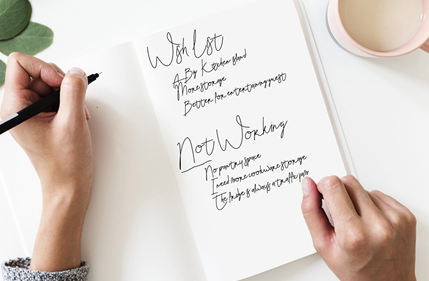
Step 1: Set goals for your remodel
What are you hoping to achieve through this kitchen remodeling project? Here are a few goals our clients often share with us:
Creating a kitchen that suits their lifestyle
Increasing resale value
Incorporating smart appliances to create a more future-friendly kitchen
Improving functionality, so home-cooked meals become an inviting option
Updating the space’s look, especially for older kitchens
Defining a goal will help you share your vision more clearly with your kitchen remodeling contractor. It helps to write it out as a goal statement and share it with everyone involved. You can then revisit the document at every step to ensure you’re on track and making choices in line with your vision. Very often, the remodel is planned with a big event on the horizon. For example, one of our clients in NW Washington, DC wanted theirs completed before their baby boy was born. We completed this kitchen remodel project with them in 8 weeks, just a few weeks before they welcomed the newest member of their family home.
Dura Supreme Kitchen design by Bath Plus Kitchen
Step 2: Evaluate your existing kitchen
With a clear goal in mind, you can approach your Dura Supreme kitchen designer and together you can evaluate your goals and your existing kitchen. If you’re not sure how to evaluate them, start with these questions. At the Bath Plus Kitchen showroom, our selection process is a curated one that’s designed to ensure each project is a good match for the homeowner and the designer. If you explain your goals clearly, it will be easier for the designer to tell you if they will be able to execute the project to your satisfaction and budget.
Once you have identified your kitchen remodel team, you will need to work with them to assess your current kitchen. The aesthetics are the first thing to evaluate. Ask yourself what you love about it and what you want to change. In addition, consider these factors:
Space – do you have enough counter, cabinet, and floor space?
Flow – is it easy to navigate, cook with family members, and interact with guests?
Appliances – should you upgrade to energy-saving, easier-to-use appliances?
Accessibility – can family members of various ages and use it safely, including yourself as you get older? What about people with disabilities?
Children and pets – do you need to make any special provisions for them?
Step 3: Design your dream kitchen
With a clear vision of your future kitchen, you can proceed to the fun part – designing! Yes, you will need to be realistic, stick to your budget, and make adjustments for any limiting factors, but a good kitchen designer can help you find creative solutions to give you a kitchen you will fall in love with. It’s important to be flexible and open to new possibilities during the kitchen design process. However, you should also stand firm on what you really want. For example, what kind of layout works for you? If you’re not sure what your options are, explore the pros and cons of some tried-and-true kitchen design layouts.
At our Bath Plus Kitchen showroom, I like to set up a meeting with prospective clients at this point. Prior to the initial visit, we ask our clients to email us the following:
Photos of the current kitchen.
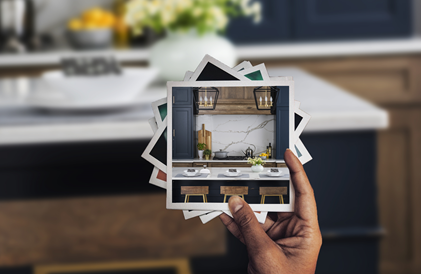
Inspirational photos and/or a summary of goals and design aesthetic.
Rough measurements and/or a sketch of the existing kitchen.
During this initial appointment, clients will be able to:
Meet and interview one of our designers to explain the project goals, learn how we work, and determine if we’re the best fit for the project.
Touch, feel, see our cabinetry displays and samples. Our Dura Supreme Showroom features two kitchens and a remodeled bathroom to showcase our level of design and craftsmanship.
Settle on a rough budget for the project, depending on the size, scope, and level of materials required.
Once this is done, my designers go on to prepare plans for the job that include photo-realistic renderings for our clients. It’s a critical step because it will give you a clear picture of the kitchen you are planning.
Dura Supreme Cabinetry design by Bath Plus Kitchen
Step 4: Select your materials
Material selection is an integral part of the kitchen remodeling process. During this step, you will need to select materials that are functional, aesthetically pleasing, and that will suit your budget. Remember that this is an investment, and cutting corners here can make you unhappy with the final outcome. It’s essential to think long-term when it comes to choosing your flooring, appliances, cabinets, light fixtures, countertops, backsplash, and other kitchen elements.
That said, there are several incredible options to choose from that will suit your budget and needs. The Bath Plus Kitchen experts believe that kitchen cabinetry can make or break a kitchen design, which is why we offer fully custom and semi-custom cabinets from a top-rated manufacturer, like Dura Supreme Cabinetry. For example, many of our clients love the versatility of the Dura Supreme cabinets that we help them customize.
Dura Supreme Cabinetry shown in the Kips door style with the “Flint” Matte Foil and the Dash door style in the “Lodge Oak” Textured TFL
Step 5: Apply for building permits
Once the kitchen design plans are drawn up, you will need to apply for building permits. I work with clients from Virginia, Maryland, and Washington, DC, and know that requirements vary based on location. That’s why it’s always best to consult your local permitting office to ensure there are no oversights and potential code violations. Your designer can help provide you with advice and help you with this process.
Dura Supreme Cabinetry design by Bath Plus Kitchen
Step 6: Complete the demolition and re-evaluate
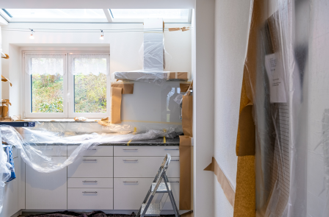
Here’s where the real work begins. Your remodeling team will start to remove your existing kitchen – floors, cabinets, appliances, and perhaps a few walls. A good team will minimize the mess and inconvenience, which will make a massive difference to you if you opt to live at home during this time. Once this is done, your team will inspect the kitchen to see if any adjustments need to be made due to unforeseen factors such as uneven floors and other construction flaws.
Flooring work in progress in a historic Washington DC home by Bath Plus Kitchen.
Step 7: Start the plumbing and rewiring (rough-in work)
This covers the framing, plumbing, and electrical work. At this stage of the kitchen remodeling process, the focus is on the walls of the kitchens and what goes into them. Since adherence to building codes is essential here, it’s important to let the professionals decide the best way forward. A professional inspection will happen once the work is done to ensure that your remodel is up to code so the project can continue.
A beautiful corner sink in a Dura Supreme kitchen designed by Bath Plus Kitchen
Step 8: Finish the walls, doors, and windows
Once you pass the inspection, you can complete the walls. This will entail hanging, taping, finishing, and priming drywalls. Doing a thorough job here will make the next steps of the kitchen remodeling process smooth sailing. After this, you can move to the doors and windows; finishing these will ensure your measurements for the kitchen cabinetry are correct.
Step 9: Complete the flooring
Contractors choose to do this at different points during the kitchen remodeling process. Some believe it works better if done after the cabinetry, while others recommend prior. We like to make a recommendation based on each project and its unique requirements. To decide on your flooring, look up a range of options for inspiration, from the classics to the trends.
Dura Supreme Cabinetry design by Bath Plus Kitchen
Step 10: Install the cabinetry, countertops, appliances, and fixtures
This is where things start getting exciting, as you begin to see your kitchen come to life! Those materials and elements you so carefully selected will be installed. Your new kitchen cabinets, countertops, kitchen appliances, plumbing, and electrical fixtures will all fall into place, allowing you to finally see your new and improved kitchen.
Dura Supreme Kitchen design by Bath Plus Kitchen
Step 11: Add the finishing touches
Once all the major tasks are completed, it’s a good idea to go back to your list and see what’s left. You can get these done and add the finishing touches. As mentioned earlier, the flooring may be put in last, so this last step will look a little different for different projects. I recommend taking the time to check all the little details before your contractor calls it a wrap.
Dura Supreme Cabinetry design by Bath Plus Kitchen
Step 12: Say hello to your new kitchen!
This is where you remember why you wanted a remodel in the first place! Step into your new kitchen and celebrate all the hard work and brilliant ideas that went into creating a space that you will love for many years to come.
Dura Supreme Cabinetry design by Bath Plus Kitchen
Designer Feature: Who Says a Small Kitchen Can't be Elegant?
At our Dura Supreme Showroom in the Washington, DC area, Bath Plus Kitchen, each project is highly tailored to our client’s desires and requires significant attention to detail. Today I’d love to share a story about one of our smallest projects with a tremendous amount of detail.
Being a small kitchen in an old building in Washington, DC posed some challenges. This historic kitchen was a 3rd-floor ‘walk-up’ meaning no elevator! There were also many of the usual quarks of older buildings, from plaster walls and ceilings that are out of plumb to outdated electrical and plumbing.
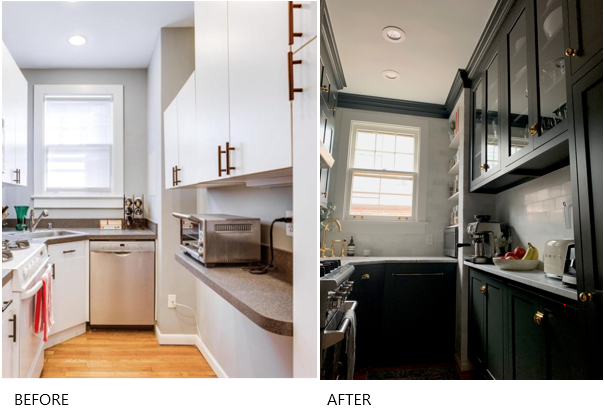
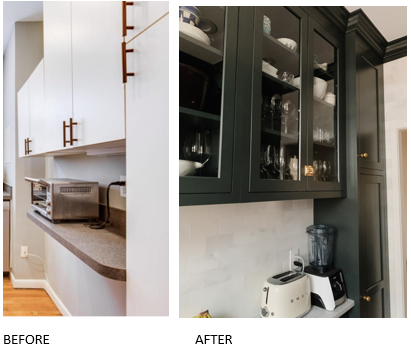
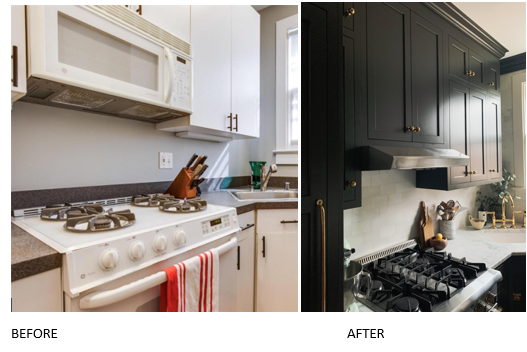
BEFORE
My clients were worn tired of the white painted cabinets of their old kitchen and wanted something unique, trendy, and luxurious. They also wanted the new kitchen to coordinate with the character of their classic home.
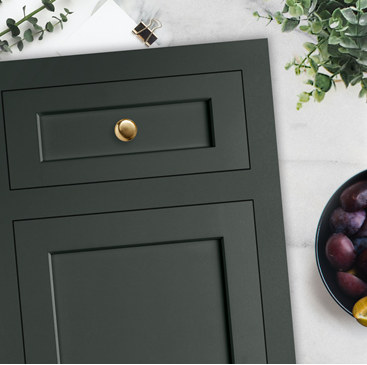
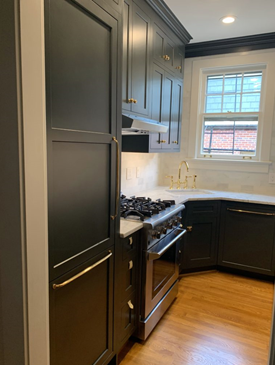
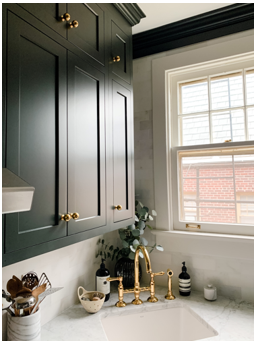
Dura Supreme’s Curated Color, “Rock Bottom” by Sherwin-Williams was the perfect choice for the cabinet finish. It’s moody and dramatic, yet a timeless classic hue. To call to the historic characteristics of the home, we selected the Hudson Inset door style. Inset cabinetry is a popular and distinctive cabinetry construction style inspired by early American furniture makers and offers an authentic, hand-crafted look with timeless appeal, perfect for this historic home.
Dura Supreme’s Hudson Panel Inset door style in “Rock Bottom” paint on Turkish Carrara Marble.
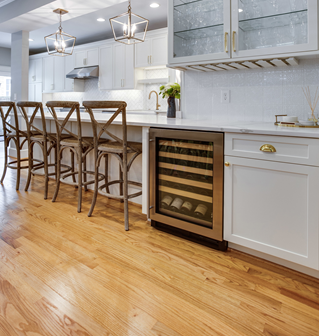
With the small space, I didn’t want the kitchen appliances to overrun the look of the space. An in-cabinet European-styled refrigerator and a paneled dishwasher from Bosch were used to create a cohesive look.
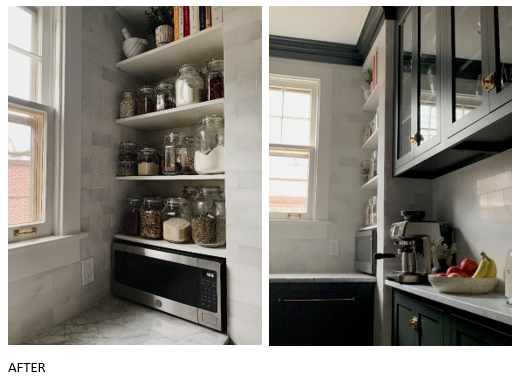
My clients wanted to maximize storage space in their small kitchen. Fortunately, my team at Bath Plus Kitchen was able to use custom-fit cabinets from Dura Supreme cabinetry to make the most of the space. We were able to take advantage of the space across from the range by adding cabinets designed to fit the depth and height. Stacking the cabinetry and bringing the crown molding to the ceiling greatly expanded the storage.
The microwave storage and open shelving for pantry goods is one of my favorite features. Formerly this space was used as a lever system to bring heavy items from the floor up into the unit. The lever system was no longer functioning. During the demolition phase, my team at Bath Plus Kitchen was able to determine more space was available here than thought, which is always great news in a small kitchen.
This kitchen demonstrates what is achievable with custom-fit cabinetry. Thanks to Dura Supreme Cabinetry, my clients were thrilled to have an elegant space that fit their unique personalities and lifestyle.
A well-designed kitchen becomes the heart of a home, from cooking and hosting friends and family to crafting with the kids, it’s a place to create and share. As such, the kitchen is a great place to begin when shifting towards an eco-friendly home that promotes sustainability and ethical living. If you’re looking to redesign your kitchen, there are many more options than purchasing a new, expensive suite from a chain store. With a little imagination and some eco-savvy tips, you’ll be able to create a one-of-a-kind kitchen with all the benefits and half the cost. Here’s our best advice to help you get started.
Get Creative
Using reclaimed materials is the perfect way to keep your costs and environmental impact low when designing your new kitchen. Plus, there is a whimsical charm in using repurposed materials that you just don’t find with something run-of-the-mill. An old globe stand can become a kitchen roll holder, a chest of drawers revamped into a kitchen island, and kitchen cupboards can be easily restyled with some stunning vintage cabinet knobs.
Look in charity stores and online marketplaces to find reclaimed wood, furniture and rarities that could be repurposed and given a new lease of life. If you struggle to think creatively, there is a whole ocean of inspirational upcycling ideas at your fingertips on the internet, where people have used the most unusual odds and ends to create their own stunning, eco-friendly kitchens.
Opt for energy saving fixtures
Did you know that traditional bulbs only convert around 5% of electricity they use into light? Switching to LED lights will make your kitchen far more efficient and help save you money on your electricity bill too. The longevity of LED lights make them a great choice for incorporating under-cabinets to illuminate your worktops, as they rarely, if-ever, need to be changed.
If you are looking to change your taps, many retailers offer energy saving taps which are a great investment. You could also opt for aerated taps, which reduce the flow of water by up to 10 litres per minute, meaning big savings on your water bill.
It’s worth investing in energy saving appliances for your kitchen, too. If you buy new, look for the energy rating label to help you choose. Try to get the most efficient one you can within your budget. Don’t forget that you can also look for second-hand appliances – just make sure they are still in good condition.
Make gradual changes
Redesigning an entire space is stressful enough without worrying about having to replace every non-sustainable item that you own. If you have a set of plastic bowls, throwing them into the landfill and buying some nice wooden ones is not very economical, even if it may look that way to your guests. If you are looking to update your kitchen accessories and tableware, take them to a charity shop instead of the skip. Afterall, your junk may just be another person’s treasure.
You can also simply replace items as they break or deteriorate, and opt for more sustainable options when you do. Some things, like cling film and plastic tupperware, you need never buy again if you invest in some eco-friendly alternatives such as cloth or beeswax reusable food wraps and glass or bamboo containers.
Enjoy the process
However you decide to restyle your kitchen, enjoy the process and have fun creating a greener kitchen for you and your family to share. Doing a little upcycling is great therapy for the soul, and it feels great to create something unique while also saving money.